


Research, young talent and animal health as the protagonists of the 29th edition of the SYVA International Award
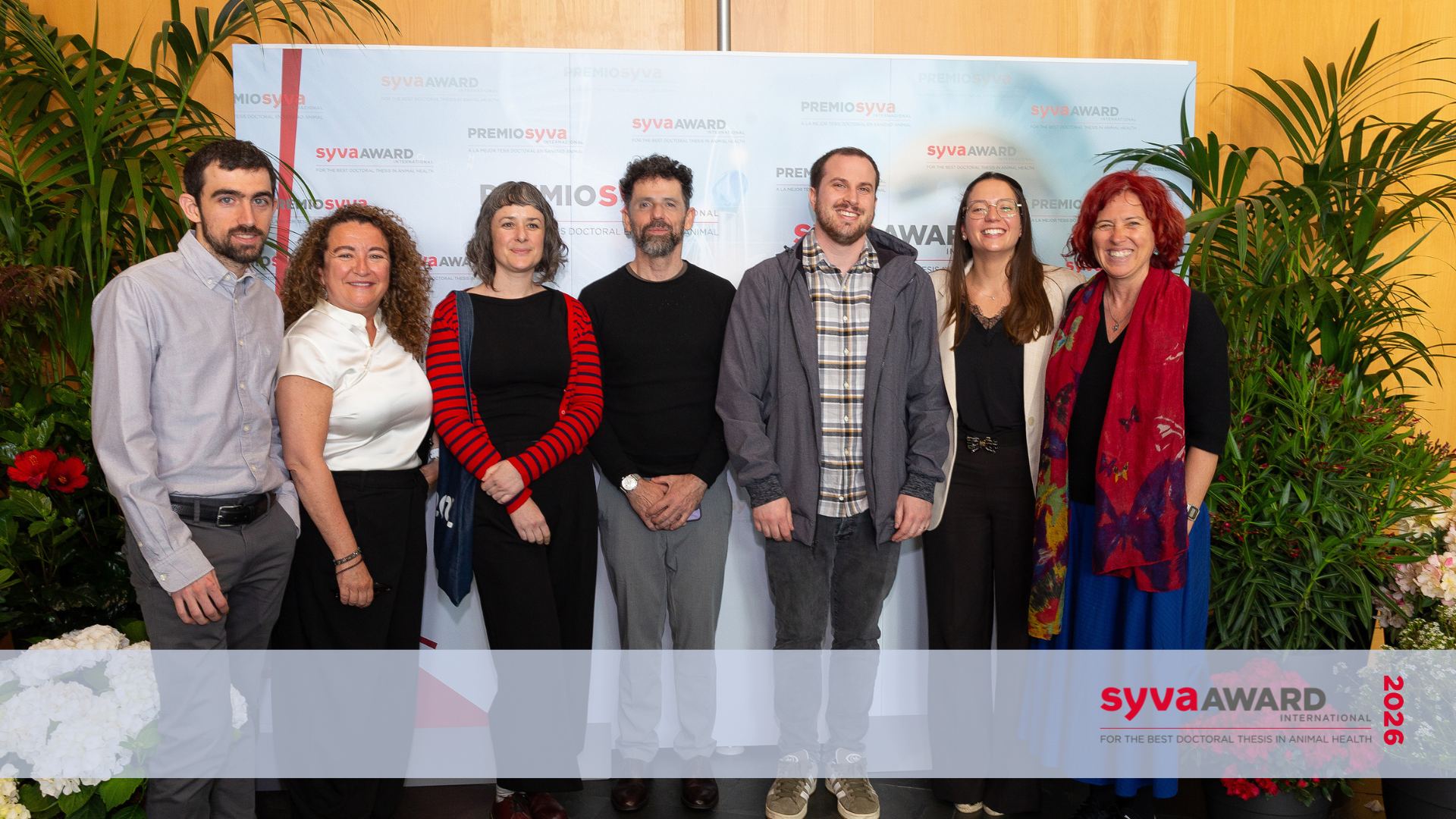 Celebrating, in partnership with University of León, the award ceremony for the 29th edition of the SYVA Award International for the best doctoral thesis in animal health, we shared a day defined by science, knowledge exchange and recognition of the work carried out by young researchers committed to the future of Animal Health.
Researchers, representatives from academia, members of the international jury, PhD supervisors, SYVA collaborators and the families of the award winners came together for an event that, over the years, has become a meeting point between universities, veterinary research and industry.
The day began with a visit to SYVA’s production facilities, where guests had the opportunity to gain first-hand insight into the company’s activities and its longstanding commitment to research and development in animal health.
This was followed by the official award ceremony, held in a scientific yet warm and deeply human atmosphere, shaped by contributions from representatives of SYVA, the University of León and the award winners themselves, who presented their research projects.
In his opening speech, Javier Sanz underlined the importance of supporting new generations of researchers at a time when health, environmental and food-related challenges are becoming increasingly interconnected.
“Animal health needs research, it needs young talent, and it needs people capable of asking new questions and turning knowledge into solutions that benefit society.”
He also stressed that current challenges such as Bluetongue, Epizootic Haemorrhagic Disease and African Swine Fever require responses grounded in science, collaboration and innovation.
“Without science there can be no effective prevention. Without research there are no new tools and no real progress.”
This year, 31 doctoral theses from 15 universities across 7 different countries were submitted. María Luisa de Arriba Martín, secretary of the jury, highlighted the exceptionally high standard of the projects presented and the difficulty involved in reaching the final decision.
The main prize of this 29th edition was awarded to Dr Gerard Badia Bringué for his thesis on Bovine Paratuberculosis, carried out at NEIKER and defended at the University of the Basque Country.
The jury particularly praised the innovative nature of the work, which explores new approaches to improving the early diagnosis of the disease and the selection of genetically resistant animals.
Two runners-up awards were also presented.
The first, the Professor Valentín Pérez Pérez runners-up award, was granted to Dr Judith Guitar Matas for her thesis, defended at the Autonomous University of Barcelona, focusing on the use of multi-omics technologies to study Antimicrobial Resistance in post-weaning diarrhoea in piglets.
The jury particularly valued the combination of state-of-the-art bioinformatics techniques with classical experimental work, as well as the project’s direct relevance to public health.
The second runners-up award, the Agnès Hildegard Sjöberg award, was presented to Dr Enrique Riera Ferrer for his research into a blood-feeding parasite affecting gilthead seabream in Aquaculture.
The jury described the thesis as an outstanding example of applied scientific research, laying the foundations for future control tools against this parasitic disease, which has a significant economic impact on the aquaculture sector.
Following the ceremony, the three award winners presented their work and shared their personal experiences throughout their PhDs, the challenges they faced during their research and the future perspectives opened up by their findings. These presentations highlighted not only the scientific excellence of the awarded theses, but also the commitment, passion and perseverance required in animal health research.
In the closing remarks, Santiago Gutiérrez Martín, Vice-Rector for Research at the University of León, emphasised the fundamental role of scientific research as a driver of progress for society and the strategic importance of the One Health concept.
“Research in this field is research into global health.”
He also addressed a particularly inspiring message to the young researchers attending the event:
“The young researchers of today will, in 10 or 15 years’ time, be leading change through knowledge.”
Our thanks go to everyone who contributed to making this day dedicated to science, innovation and the future of animal health possible.
The Syva experience: more than just an award – Discover the winners’ day during the awards ceremony.
Do you have any questions? Read our FAQ
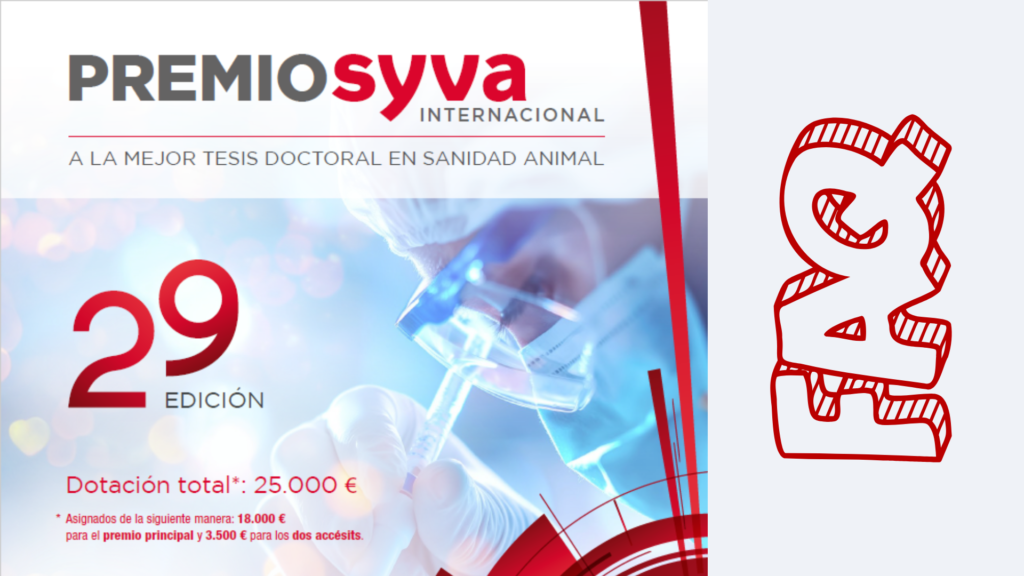
Check out the rules of the 29 edition here!


The thesis must be written in English or Spanish. If not the case, a summary in English or Spanish should be provided, structured as follows: the Introduction, the approach, the objectives, the conclusions and a 2-3 page summary of the different chapters. Add this summary to the beginning of the PDF of your thesis.
They participated in the Syva Award!
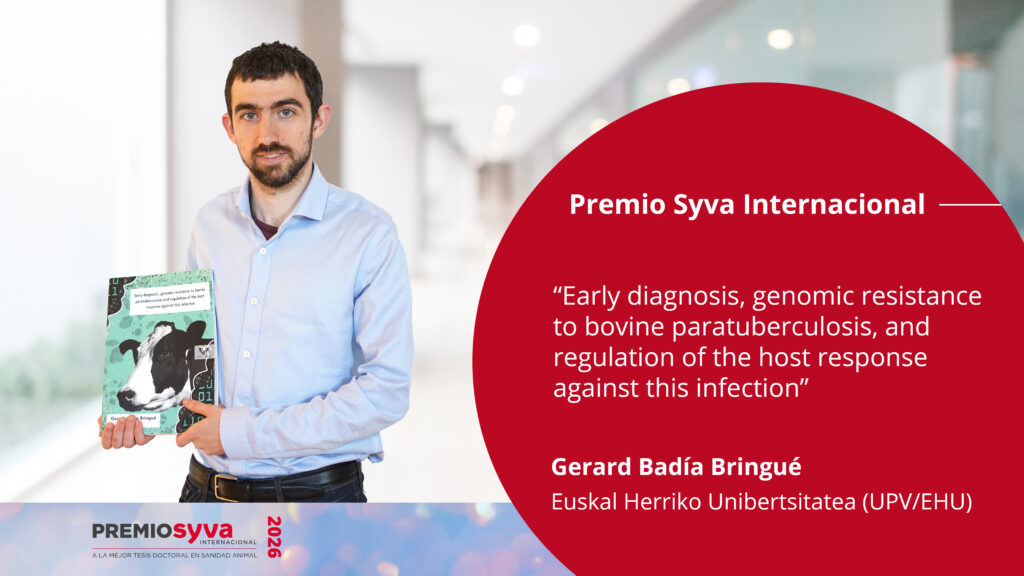
Gerard [29th edition]
“Early diagnosis, genomic resistance to bovine paratuberculosis and regulation of the host response against this infection.”
Gerard Badía Bringué – NEIKER Research Institute – University of the Basque Country.
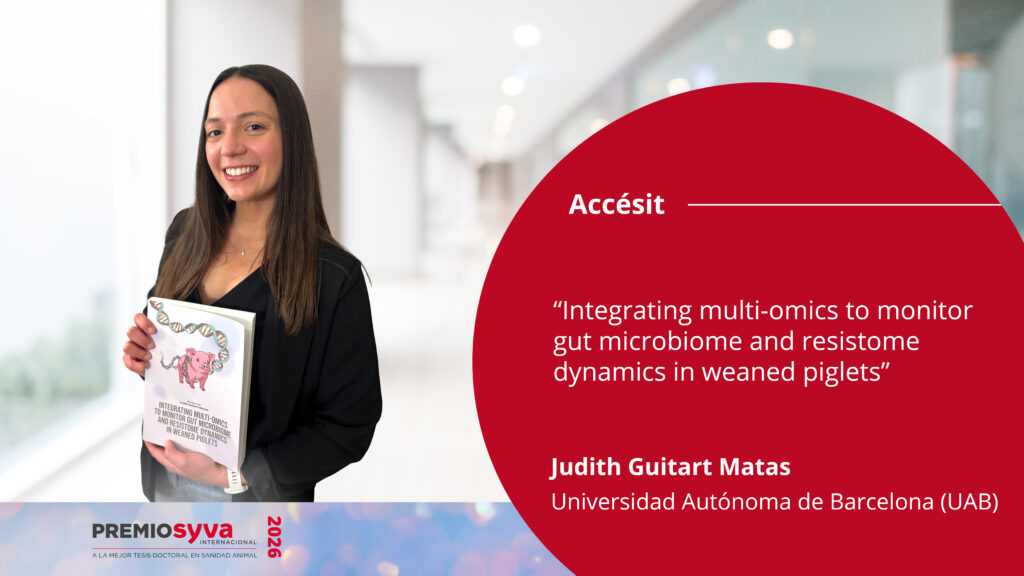
Judith [29th edition]
“Integrating multi-omics to monitor gut microbiome and resistome dynamics in weaned piglets”
Judith Guitart Matas – Autonomous University of Barcelona (UAB)
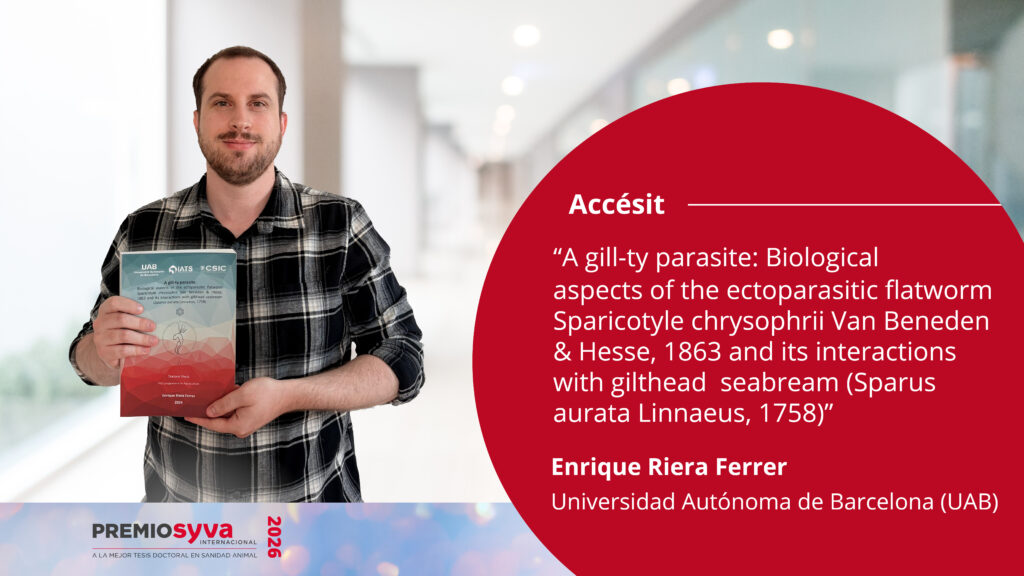
Enrique [29th edition]
“A gill-ty parasite: Biologocal aspects of the ectoparasitic flatworm Sparicotyle chrysophrii Van Beneden & Hesse, 1863 and its interactions with gilthead seabream (Sparus aurata Linnaeus, 1758)”
Enrique Riera Ferrer – Autonomous University of Barcelona (UAB)
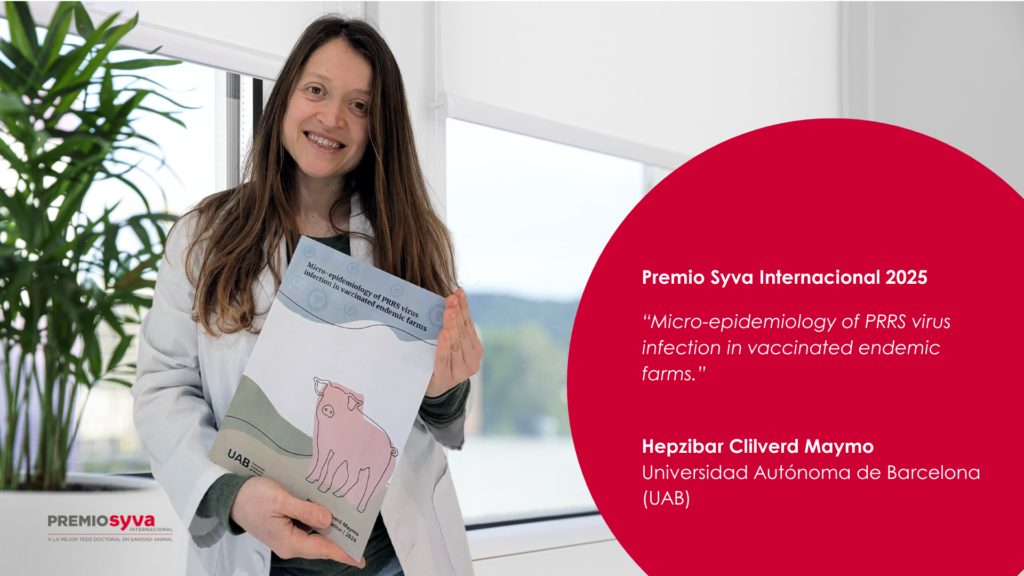
HEPZIBAR [28th edition]
“Micro-epidemiology of PRRS virus infection in vaccinated endemic farms.”
Hepzibar Clilverd Maymo – Autonomous University of Barcelona (UAB)
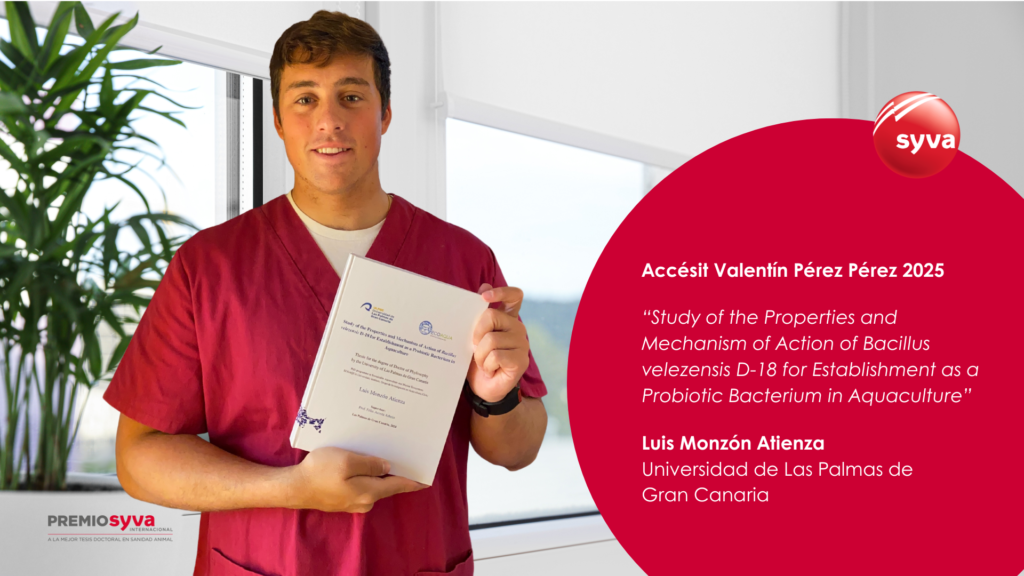
LUIS [28th edition]
“Study of the Properties and Mechanism of Action of Bacillus velezensis D-18 for Establishment as a Probiotic Bacterium in Aquaculture”
Luis Monzón Atienza – University of Las Palmas de Gran Canaria
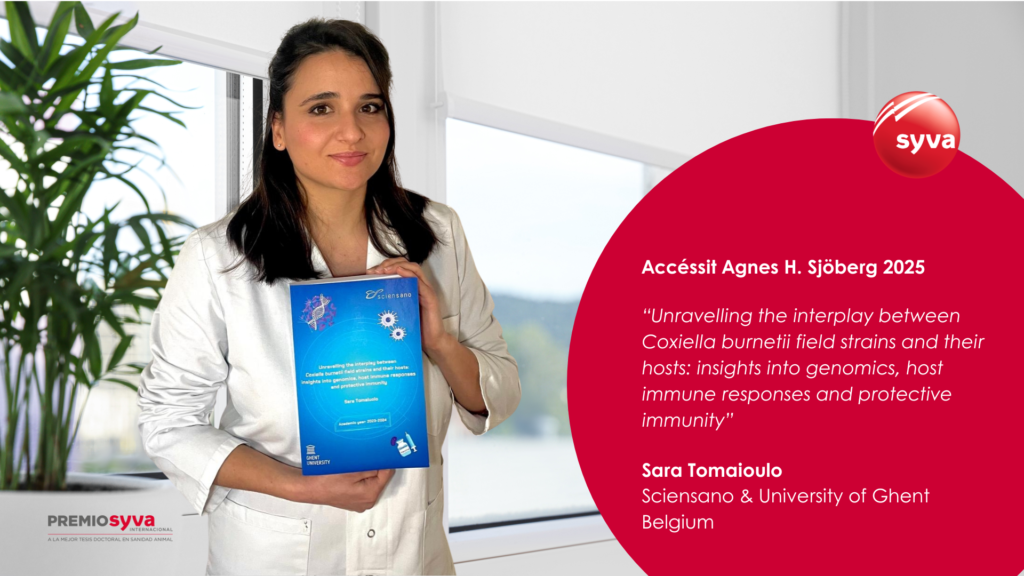
SARA [28th edition]
“Unravelling the interplay between Coxiella burnetii field strains and their hosts: insights into genomics, host immune responses and protective immunity”
Sara Tomaioulo – Sciensano & University of Ghent Belgium
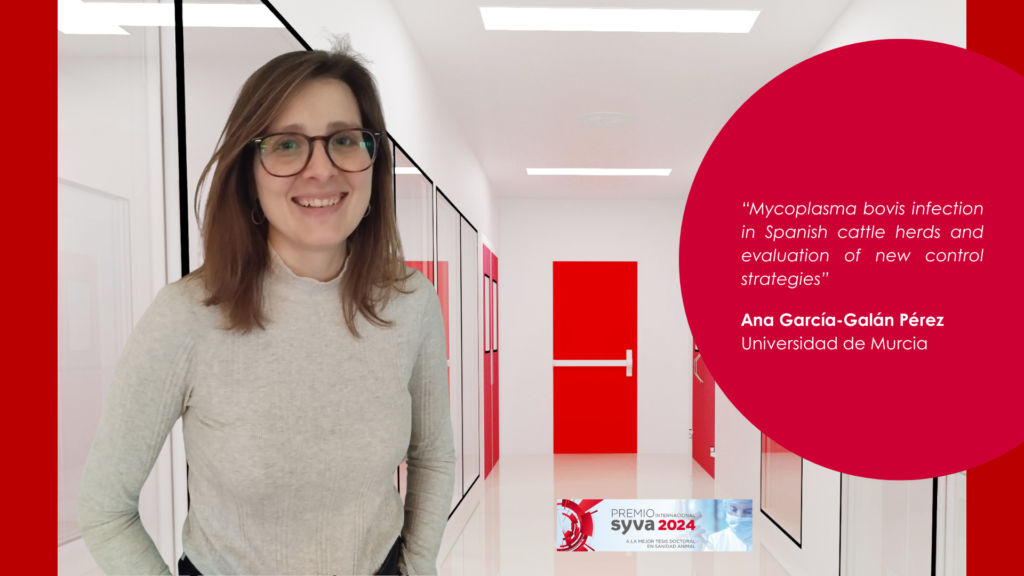
ANA [27th edition]
“Mycoplasma bovis infection in Spanish cattle herds and evaluation of new control strategies”
Ana García-Galán Pérez – University of Murcia – Spain
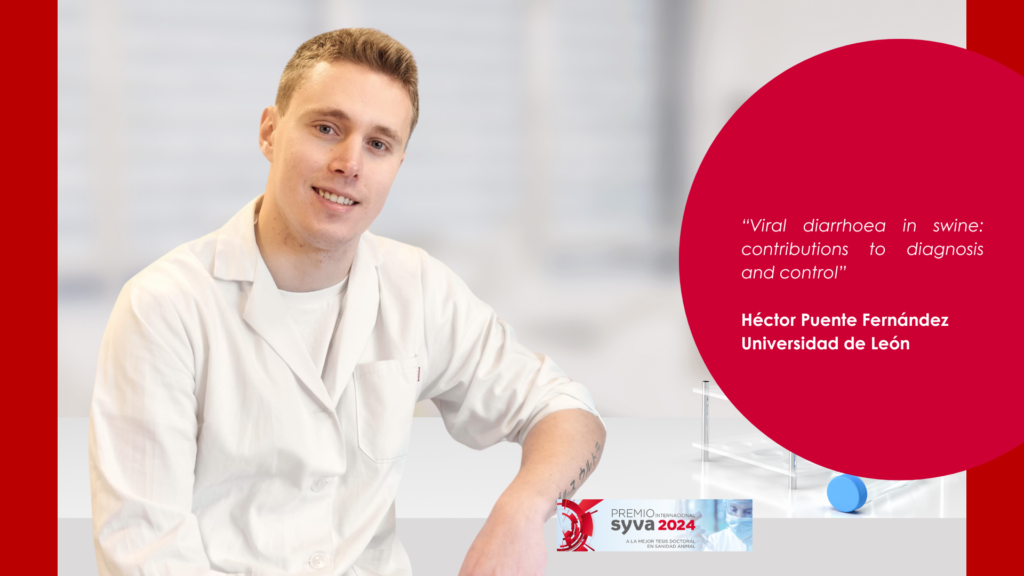
HECTOR [27th edition]
“Viral diarrhoea in swine: contributions to diagnosis and control”
Héctor Puente Fernández – University of León – Spain
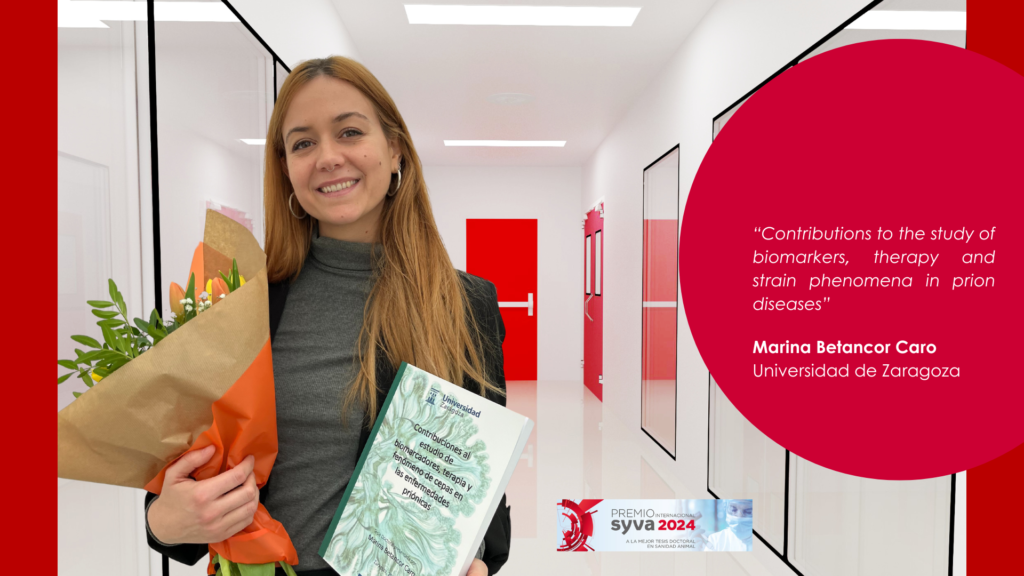
MARINA [27th edition]
“Contributions to the study of Biomarkers, therapy and strain phenomena in prion diseases””
Marina Betancor Caro – University of Zaragoza – Spain
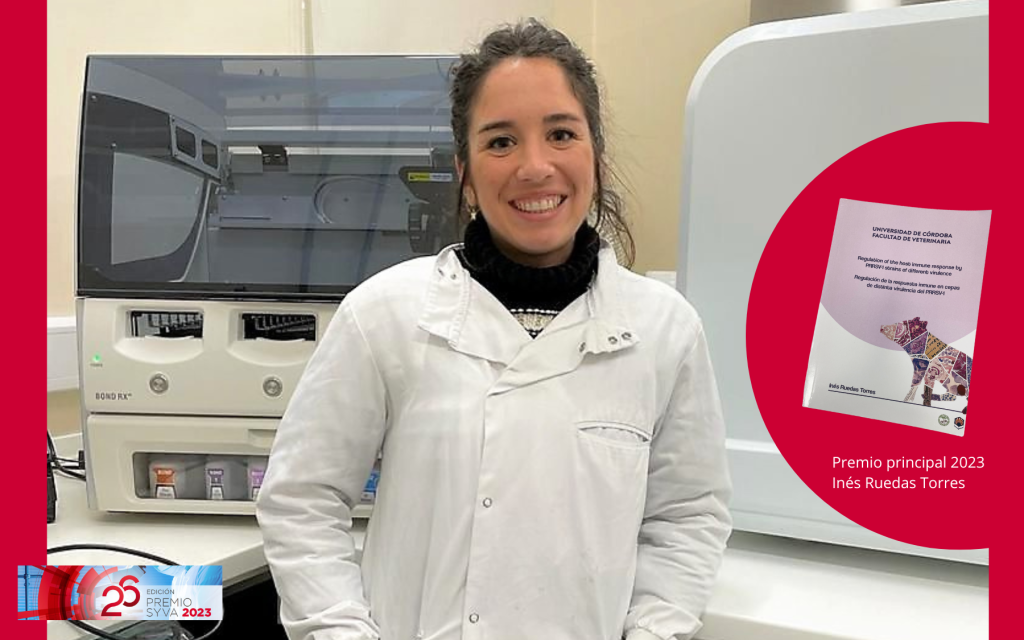
INÈS [26th edition]
“You always go to congresses, you always publish, but to suddenly be told “I’m good” is very important”.
Librado Carrasco, DVM, PhD, Dipl ECVP / ECPHM
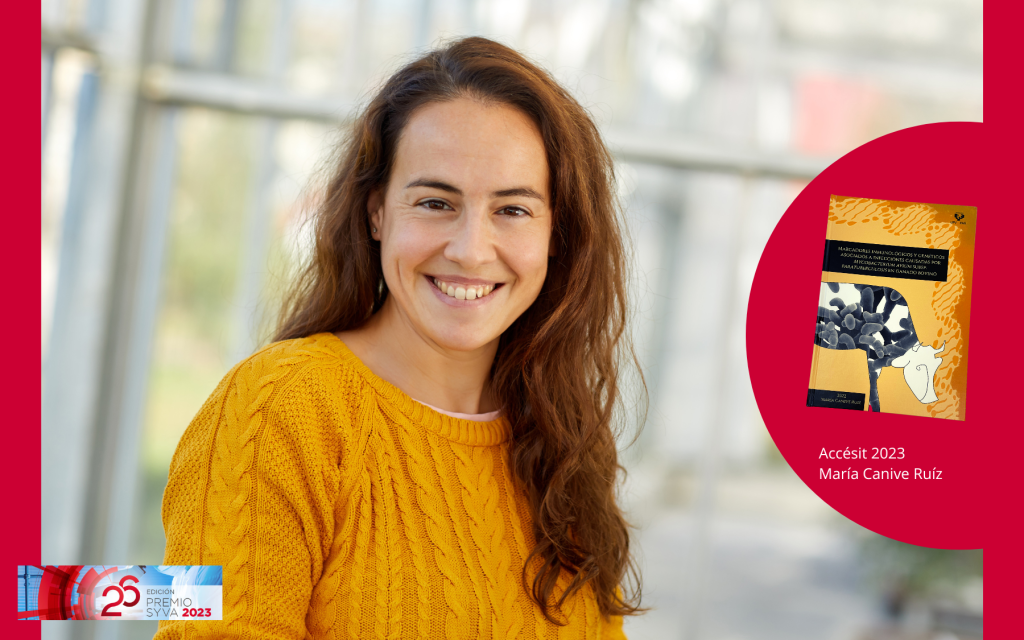
MARIA [26th edition]
“When you are a veterinarian and you work mainly in research in the animal health sector, throughout all the years of your thesis you hear about the Syva Award, which is like a kind of legend. When you begin to think about it, what you feel the most is pride”.
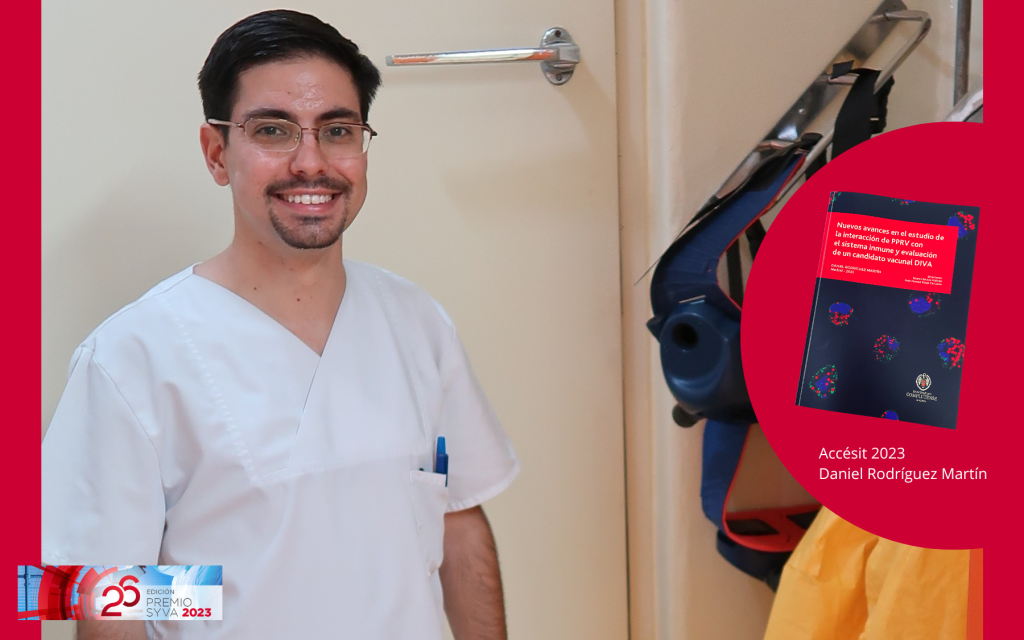
DANIEL [26th edition]
“The truth is that it is a very famous award, it is very well known in the area of animal health. It is in reality both the best economically endowed and the most prestigious”.